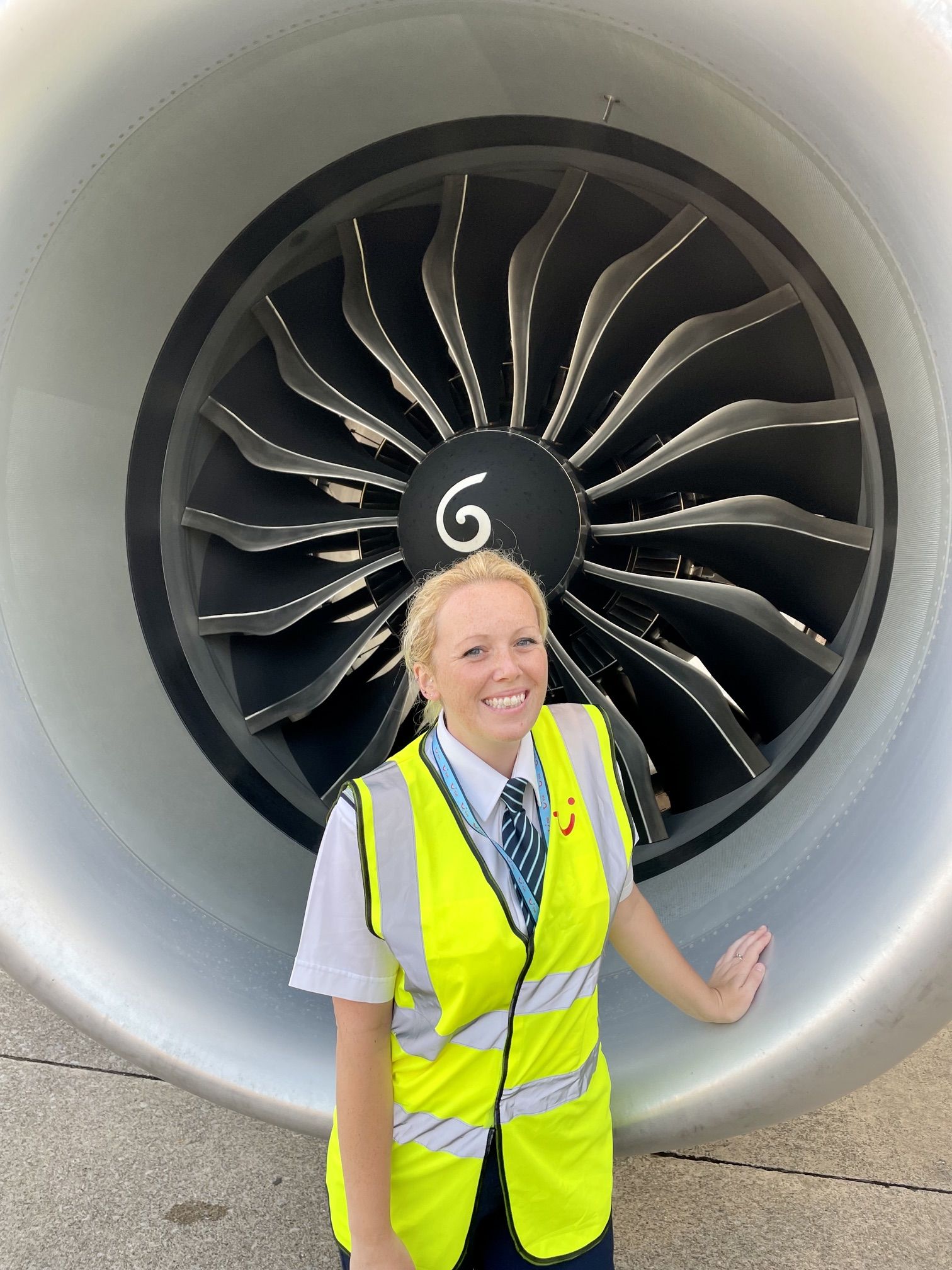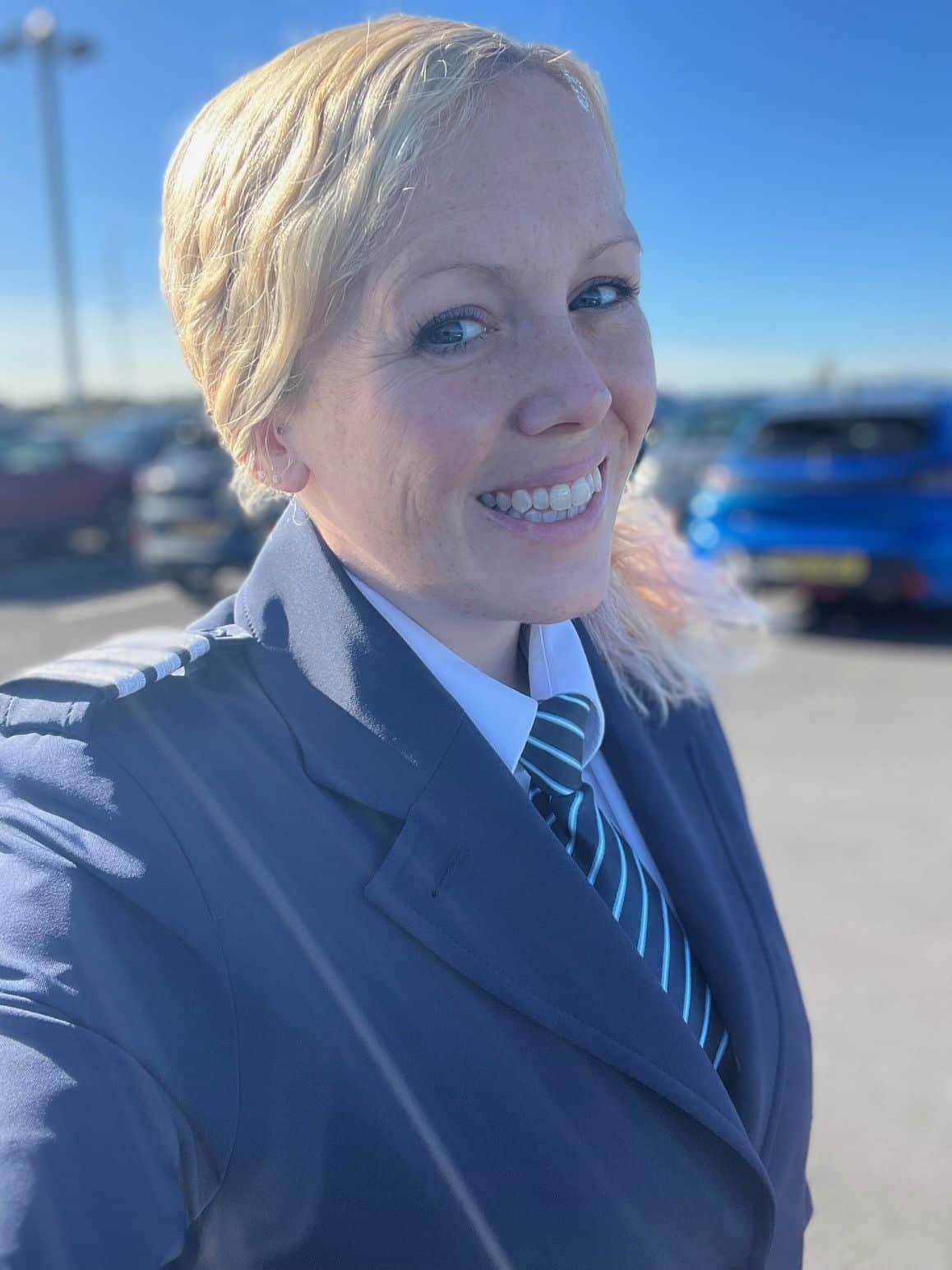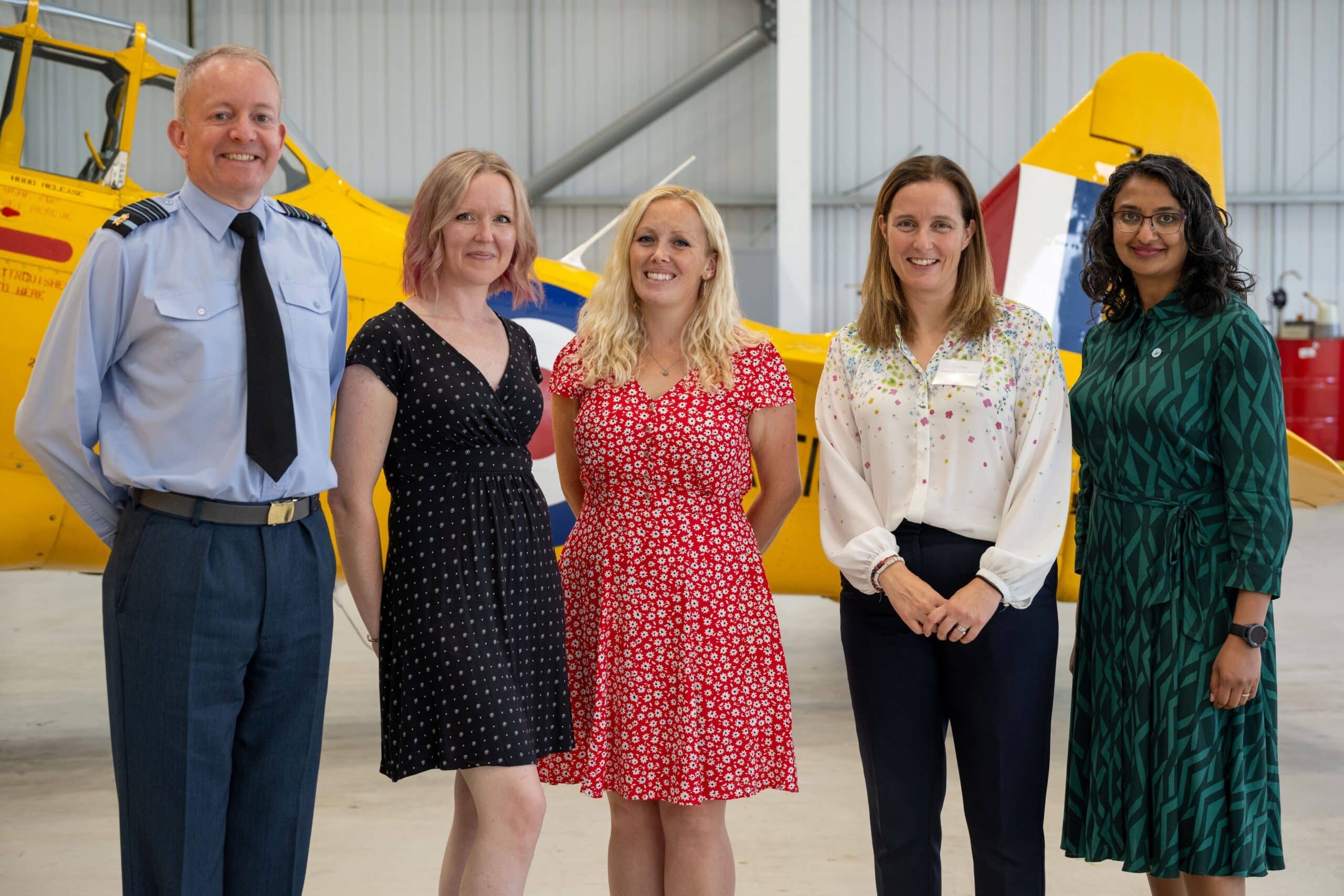



Katy Thompson (Lee), Class of 2007, took a more unusual career path on leaving St Helen’s. We asked her about her experiences as a commercial pilot and her role with a charity promoting diversity in the sector, specifically encouraging and mentoring women, who account for less than 1 in 20 UK pilots.
What attracted you to aviation, and how did you get into the field?
I first got into flying when I was 15; I was gifted a trial lesson in a PA28 by my mum as my dad, who had died when I was nine, had been an airline pilot. Initially, there was a huge amount to take in, and I was pretty overwhelmed with the challenge of learning a new skill that required a lot of self-motivation, courage, and determination. It was a world away from anything I’d ever done before. During my lessons, my flight instructor asked if I’d considered aviation as a career. Remarkably, despite my family background, I hadn’t but I looked into it and decided it was the path I wanted to take. I understood the challenges of unsociable hours, shift patterns, and night flights from seeing my parents work in the industry, so it wasn’t too much of a shock to the system. At the age of 18, while my classmates headed off to their various universities, I went to Kidlington airport to start a full-time course to learn to become an airline pilot.
What is your current role and what does a typical day look like?
After ten years in the industry, I now fly the Boeing 787 Dreamliner. It’s a wide-body aircraft so we tend to fly to long haul destinations – I see a lot of Barbados, Thailand and Mexico. No two days are ever the same, but a typical trip would look something like this:
06:00 – get up and get ready for work
08:15 – arrive at work, meet my crew (most of whom I would never have met before) and brief on the day ahead – the weather, any aircraft defects, our routing and any challenges that may bring, and our fuel decision
09:15 – take off and fly to destination – we’re very busy in the first and last hour but things get a little quieter in the cruise, so we can get to know the rest of the crew a little better, catch up on company reading or have a coffee
19:00 – dependent on where we’re flying – flights are often around 10 hours but can be more – we land, collect our bags and catch the crew transport to our hotel. From there, it’s a quick shower and change before heading down to the bar for a drink and a bite to eat. Invariably, it’ll be an early night!
Our return flight, especially if we are going westbound, e.g. to the Caribbean, will be an overnight flight. For instance, we often leave Barbados, in the late afternoon and land home around 06:00, before driving back to collapse into bed for a few hours and try to reset the body clock. It’s amazing how disruptive being away for only 48 hours can be!
What advice would you give anyone interested in finding out more about careers in aviation?
Many career advisors struggle to provide guidance regarding careers in aviation, but the information is out there. For anyone who’s nearly 18, or above, and who’s considering an aviation future, I’d absolutely suggest getting in touch with us at www.aviationinreach.org.uk. For those a little younger, the RAF Air Cadets is a great place to start, and the Air League offer scholarships to aspiring aviation professionals. If you’re considering the military, the RAF careers team are also always happy to help.