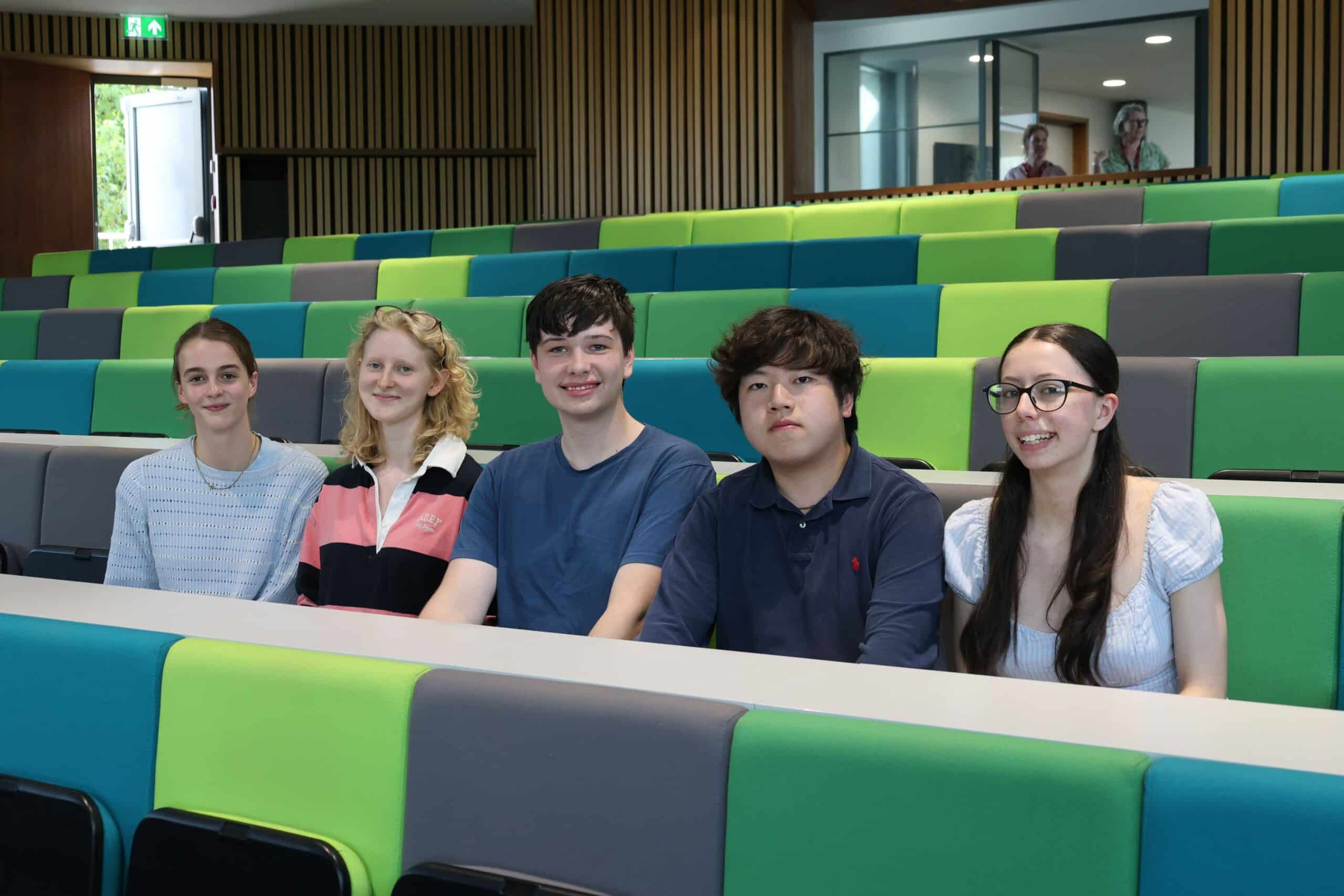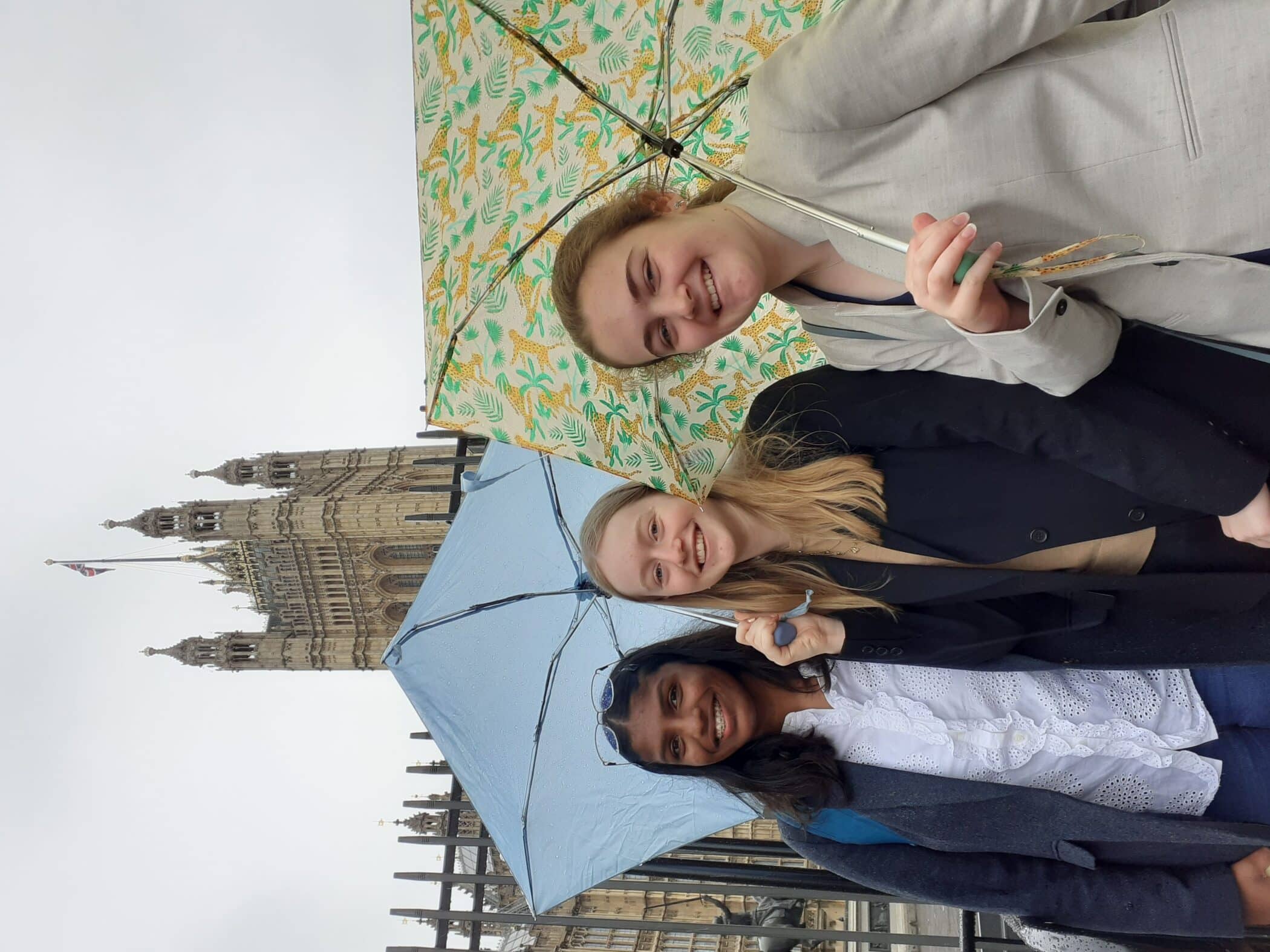








Year 11 deepened their understanding of the impacts of AI and its benefits with academic enrichment at Radley College.
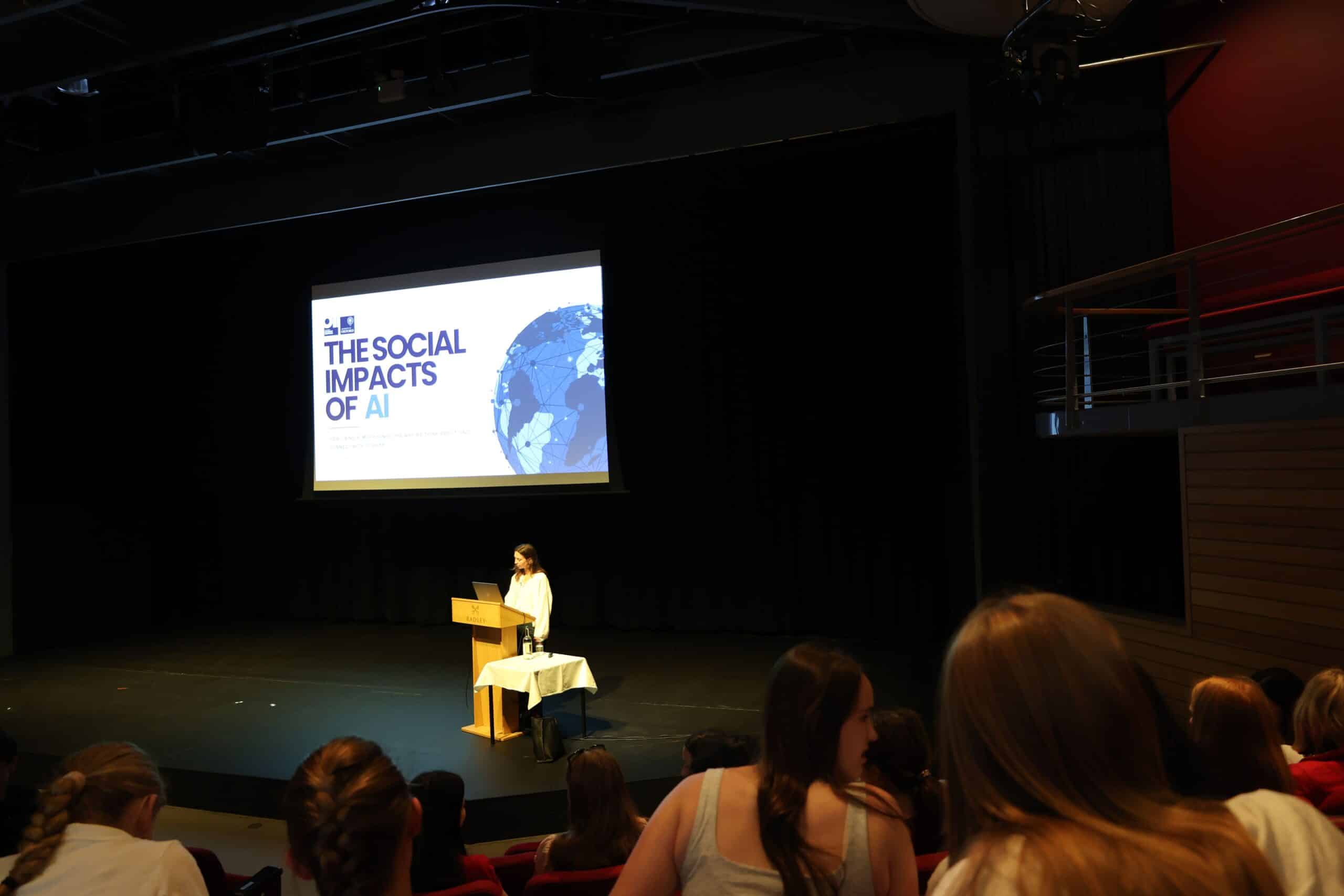
The afternoon began with an incredibly insightful talk from Dr Florence Enock, Senior Research Fellow at the Oxford Internet Institute. Her research combines large-scale surveys and behavioural experiments to understand public experiences with AI, online harms, and safety interventions. Her current work is funded by the AI Security Institute and uses a longitudinal randomised controlled trial to examine how prolonged interaction with large language models shapes people’s perceptions, expectations and evaluations of others.
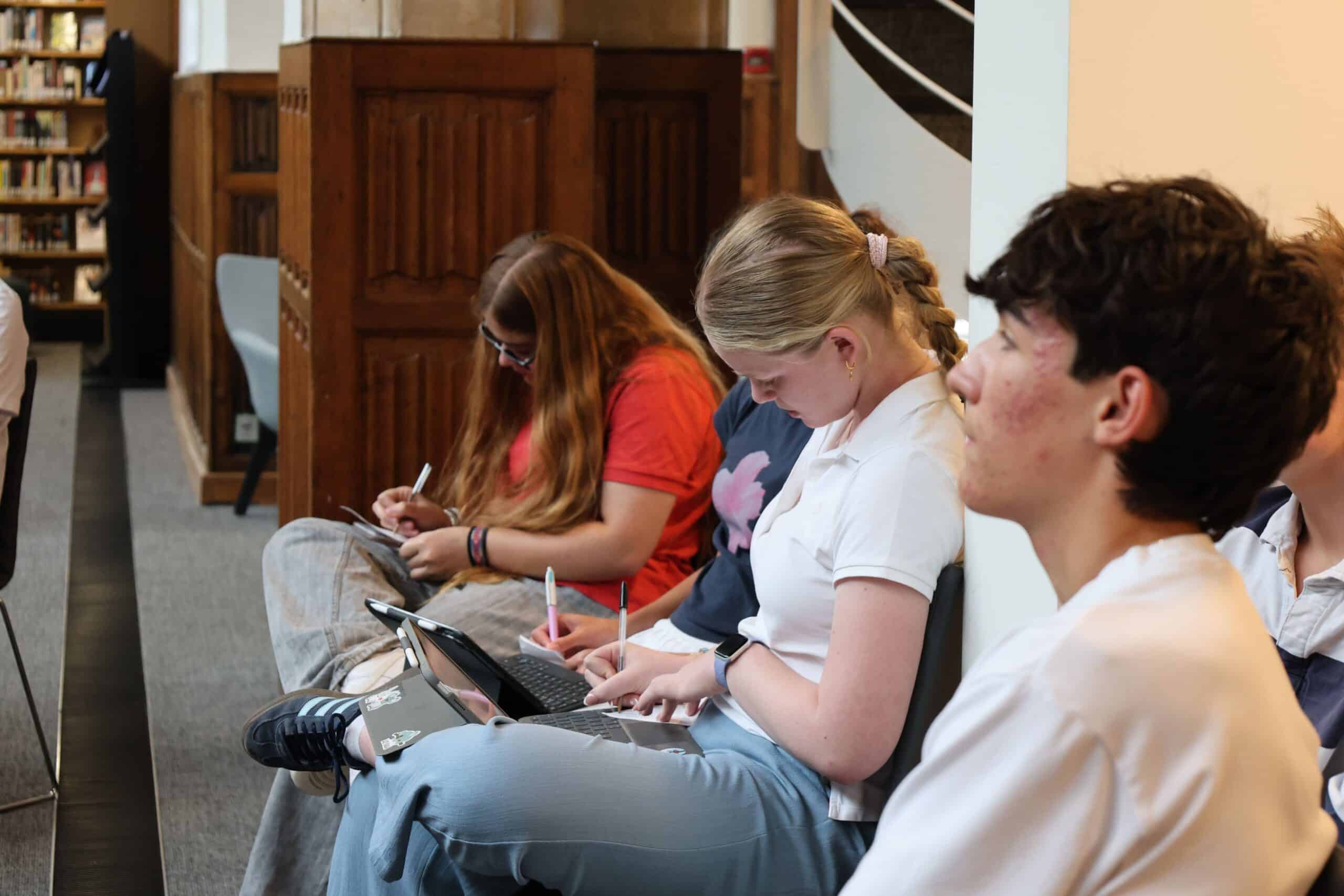
The students were then briefed to create and present on an AI agent that could solve/simplify a problem that you are likely to encounter during your Sixth Form experience.
In deciding the problem, they needed to think about who’s affected, what data/tools realistically exist that they can use, what issues they will encourage including privacy, ethics etc. Their presentation needed to include:
- Problem and goal: what exactly is being fixed, and how will they know it worked?
- Actions/tools: four-six concrete things the agent can actually do.
- Data it needs: what information does it draw on, and where would that realistically come from?
- Autonomy line: what can it decide alone vs what must go to a human?
- Failure scenario: walk through one realistic way it goes wrong, and what happens next.
- Pros and cons table: at least three genuine benefits and three genuine costs/risks (efficiency, fairness, privacy, job impact, errors, over-reliance, etc.)
- One “red line”: something the agent must never be allowed to do.
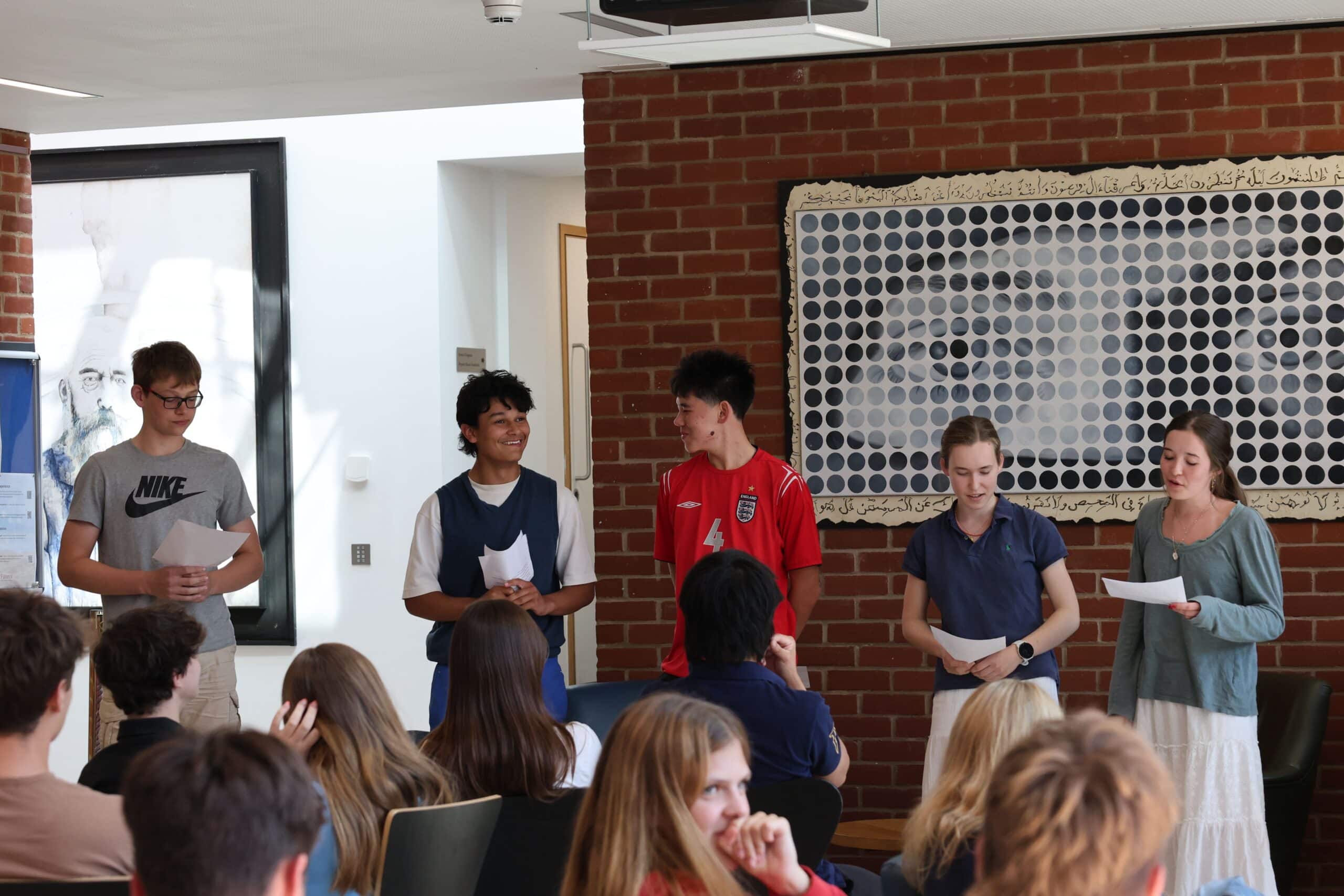
Groups then prepared a three-minute pitch first presented to their peers, who then voted through four top teams who presented to three judges (teachers from Radley College).